
Create a Wallet
Understand accounts, addresses and recovery information before creating a new wallet.
Start here →imtoken · Multi-chain Wallet
A multi-chain wallet, blockchain network and Web3 knowledge hub from imtoken
From multi-chain assets and network selection to transfers, DApp connections and token approvals, imtoken brings wallet actions and blockchain knowledge into one clear path. Understand the network, address, fee and permission scope before you confirm, so security review becomes part of everyday wallet use.
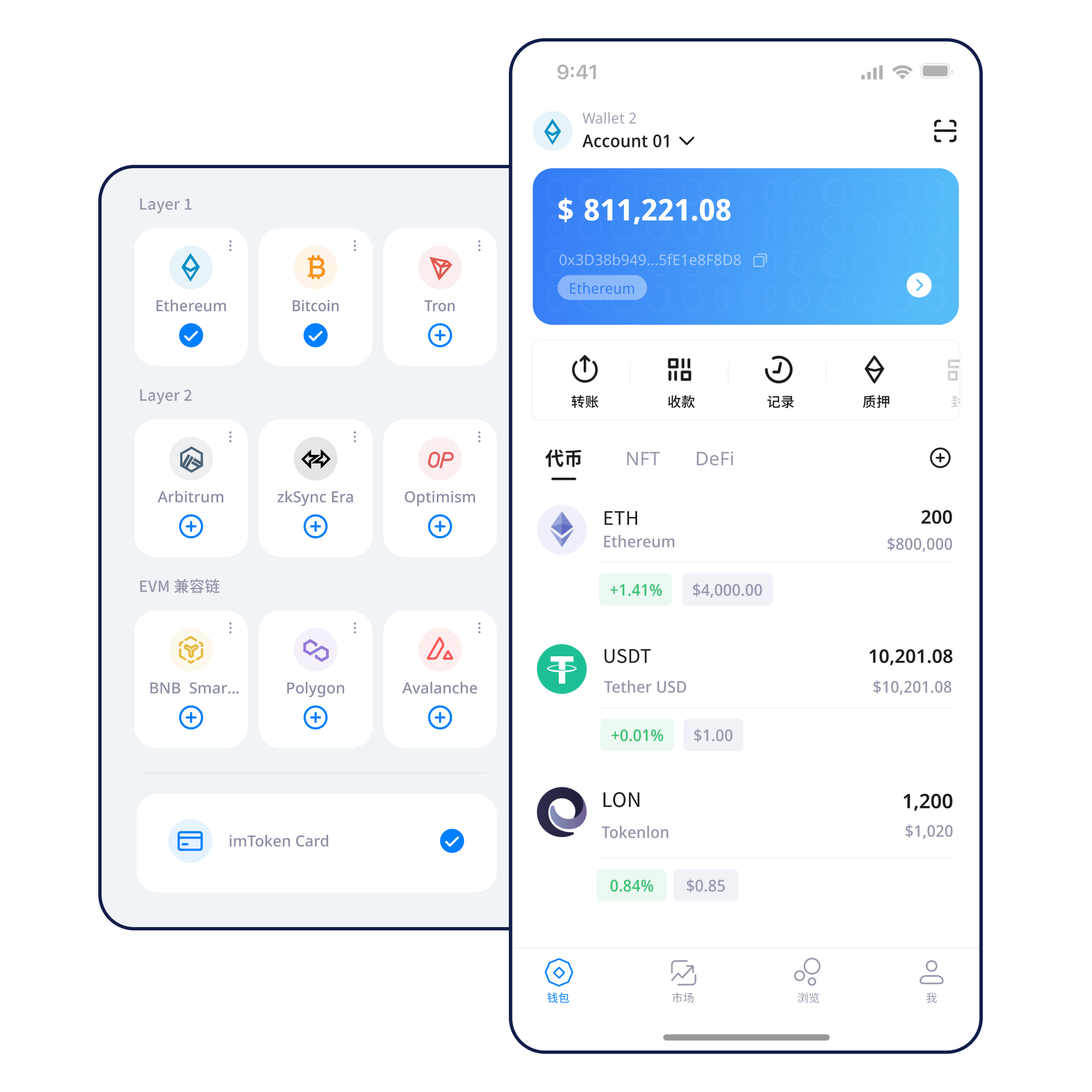
Understand accounts, addresses and recovery information before creating a new wallet.
Start here →Keep the seed phrase offline. Do not screenshot it, upload it to cloud storage or share it.
Backup principles →Confirm the intended network before sharing an address so that network context stays clear.
Receive steps →Review the address, network, amount and gas before sending, with a test transfer when appropriate.
Pre-send checks →Verify the domain, then review account, signature and approval requests independently.
Connection guide →Asset views, network management, transaction history and Web3 connections are related parts of the same workflow. Understanding how they interact makes multi-network decisions easier to verify.
Multi-chain assets
The same address format can appear on several EVM networks, while balances, transactions and gas states remain separate. Review the selected network, token contract and confirmation state together.
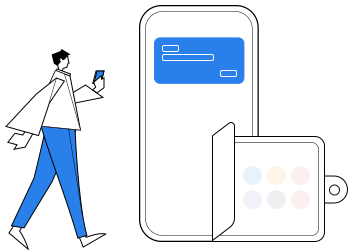
imtoken App
See networks, assets, transaction history and DApp requests in one flow. For important actions, verify the source before reviewing the signature or approval.
Send & receive
Confirm the network when receiving. Before sending, recheck the destination and amount. After broadcast, use the transaction hash to inspect on-chain status.
View the full flow →imtoken Web
Connecting an account does not approve future signatures. Recheck the domain, origin, permission scope and contract each time.
Learn about Web connections →Wallet security
Seed phrases and private keys remain under the user’s control. Do not upload screenshots or send them to anyone. Review DApp approval targets and allowance amounts, and consider revoking permissions you no longer need.
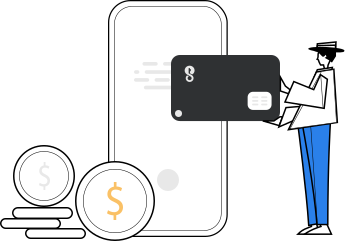
Network names, address formats, gas, block height and confirmation rules define the context of an on-chain action. When switching networks, check where the transaction will actually occur.
Each network has its own blocks, transaction state and fee environment. Confirm the network so a matching address format is not mistaken for a matching chain.
Learn multi-chain basics →After a transaction is broadcast, nodes process it and block producers include it. Additional blocks provide further confirmations.
Learn nodes and blocks →
Address formats, contract interaction and gas models can look similar, while token contracts, balances and transactions must still be checked on the correct network.
Learn EVM basics →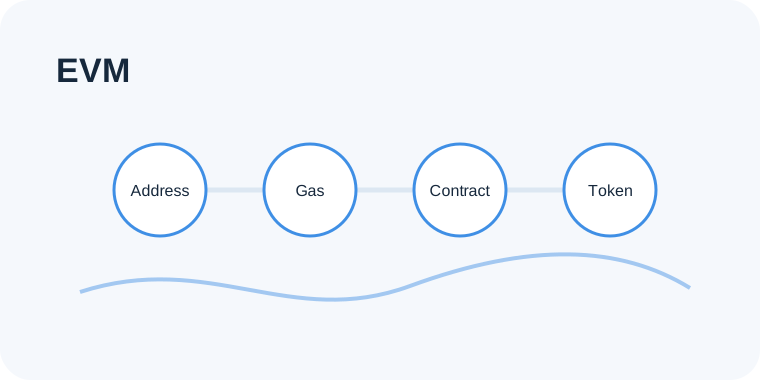
Cross-layer transfers may involve bridges, batches or waiting periods. Review the source network, destination network and actual transfer status.
Understand Layer 2 →
Fees can change with network conditions and transaction complexity. Once broadcast, use the transaction hash, block height and confirmation state to understand the result.
Learn fees and confirmations →Review order
Break the journey into actions that can be checked independently. Recovery information, network choice, transfers and approvals each have their own review points.
Use the official download entry rather than an unknown installation link.
Know whether you are creating a new account or restoring an existing one, and understand the role of recovery information.
Keep the seed phrase offline. Do not screenshot it, upload it or disclose the private key.
Confirm the network name, address format and intended use instead of relying on a familiar-looking address.
Verify the network when receiving and recheck the address, network, amount and gas before sending.
Use transaction hashes for on-chain results, inspect DApp signatures before confirming and review unused approvals regularly.
Web3 & DApps
Verify the DApp domain before connecting. After connection, separately review account requests, message signatures, transaction signatures and token approvals. When finished, disconnect connections you no longer need and review ongoing permissions.
Use a trusted entry point.
Check the complete domain and source.
Connect only the account you intend to use.
Understand what public account information is requested.
Review the target, content, allowance and expected result.
Wait for on-chain confirmation and keep the transaction hash.
Reduce unnecessary ongoing connections and permissions.
Security
Wallet security begins with ongoing control of recovery information, devices, transfer details and approval permissions. Seed phrases and private keys should remain under the user’s control, and legitimate staff should not ask for them or for verification codes. Check the address, network and amount before transferring. With third-party DApps, verify the domain, signature content, contract and approval scope. On-chain transactions usually cannot be reversed by a wallet alone, so irreversible actions deserve careful review before confirmation. Public devices, public Wi-Fi, remote-access tools and unknown links can increase risk; important actions are better handled on devices and networks you control.
Open Security CenterAcademy · Featured starter guide
A wallet address identifies an account, seed phrases and private keys relate to control, the network determines where assets and transactions exist, gas reflects execution costs, a transaction hash lets you inspect a broadcast transaction, and DApps plus approvals extend wallet interaction to smart contracts. Connecting these ideas before transferring or using Web3 reduces mistakes caused by isolated definitions.
Read the starter guide →Understand nodes, blocks, broadcast and confirmation.
Learn addresses, gas, tokens and approvals.
Understand base-layer relationships and cross-layer transfers.
Review spenders, amounts and contract addresses.
Build recovery and transaction-checking habits.
Look up common terms and their practical role.
Understand staking as a network mechanism rather than a fixed-return product. Rewards, exit timing, validator state, contract risk and digital asset price volatility all deserve separate consideration.
Ethereum Staking
Ethereum PoS uses validators to participate in block proposal and attestation. Reward sources relate to network participation, while withdrawals and exits depend on protocol rules and network state and may involve waiting.
Understand staking →Before participating
Staking does not guarantee returns. Rewards can change, validators may face network penalties, smart contracts can carry technical risk, third-party services add separate risk, and digital asset prices can fluctuate.
Learn PoS & validators →Content-first notices about usage changes, network checks, security awareness and service information, without unverified claims about partners, scale or market position.
Keep network, address, transaction state and approval target in one continuous review flow.
Do not continue any conversation that asks for recovery secrets.
A matching address format does not make networks interchangeable.
Review each signature and approval separately after connecting.
All download actions across the site lead to the same official download page.
Quick answers about recovery information, networks, gas, transaction hashes, DApp approvals and Ethereum staking.
No. Seed phrases and private keys should remain under the user’s control. Legitimate support should not request them.
At minimum, verify the destination address, target network, amount and expected gas. A small test transfer may be useful in some situations.
It can be used with a block explorer to check broadcast state, inclusion, block height and confirmations.
No. Connection, message signing, transactions and approvals are separate requests and should be reviewed separately.
Different networks use different settlement, batching and exit rules, so waiting depends on the actual network mechanism.
No. Rewards can change, exits can involve waiting, validators can be penalized, and contract plus market risks remain.
imtoken
Use the unified download entry for imtoken and check the relevant network, address, signature or approval before confirming.